

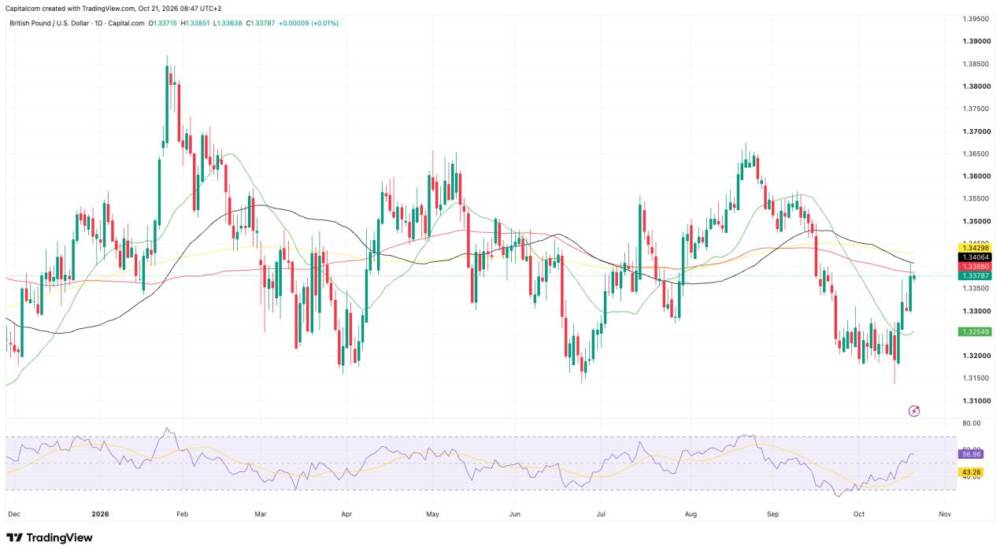
Britain’s September inflation data came in above expectations, reinforcing the argument for a Bank of England interest rate increase in November while leaving investors uncertain about the near-term outlook for sterling, market analysis from Capital.com said.
According to the analysis by Daniela Hathorn, senior market analyst at Capital.com, headline CPI inflation rose to 3.5% year-on-year in September. That outpaced the 3.4% forecast and followed an August reading of 3.1%. Monthly inflation, the analysis added, stood at 0.4%.
Hathorn said core inflation met expectations at 2.8%, but remained higher than the prior 2.6% print, pointing to persistent underlying price pressure. With inflation still well above the BoE’s 2% target, the figures are expected to strengthen policymakers’ caution, the analysis added.
Pipeline cost pressures add to the mix
The market commentary also highlighted producer prices as a further concern. It said input prices increased 8.3% annually, up from 6.7%, while output inflation accelerated to 4.6%.
That dynamic, Hathorn wrote, can signal mounting cost pressures across the supply chain. She noted that businesses may face renewed pressure to pass higher costs on to consumers, particularly if energy prices stay elevated. However, the impact on retail prices would depend on demand and on whether companies can absorb increases by narrowing margins, the analysis said.
Markets price a hike, but risks remain
On the policy outlook, the analysis said the data strengthened the case for a BoE rate hike in November. It added that markets are already anticipating a 25-basis-point increase to reach 4%.
The rise in services inflation was described as especially significant, suggesting that price pressures may extend beyond energy alone. At the same time, the BoE faces a balancing act, the analysis said: tighter policy could help anchor inflation expectations, but it also risks weakening household spending and investment, especially with higher energy costs weighing on disposable incomes.
Sterling’s outlook depends on growth and fiscal confidence
For sterling, Hathorn said the implications are mixed. A surprise on inflation could support the currency in the near term by reinforcing expectations of higher UK interest rates relative to other countries, particularly where central banks face less pressure to tighten.
But she cautioned that higher inflation is not automatically positive for the pound, especially if it worsens growth prospects or undermines confidence in the UK’s fiscal position.
The analysis pointed to public borrowing of £24.5 billion in September, which it said was above expectations, adding uncertainty ahead of next week’s Budget.
Ultimately, the direction of sterling may hinge less on the inflation overshoot itself than on investor confidence that the BoE can restore price stability without triggering a sharper economic slowdown, Hathorn concluded.


