

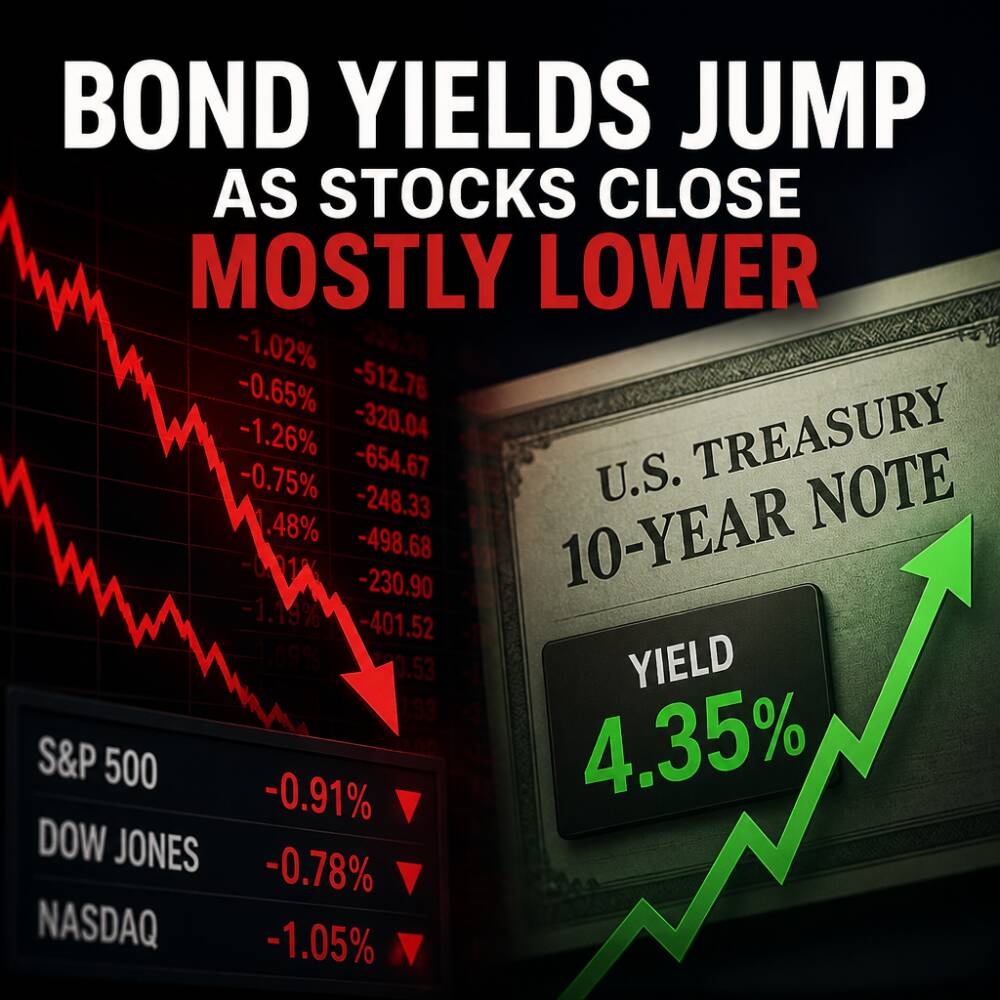
U.S. stock indexes ended mixed on Thursday as gains in the Nasdaq 100 failed to offset weakness in the Dow and broader selling pressure tied to higher oil prices and rising bond yields. The S&P 500 slipped 0.02%, the Dow Jones Industrial Average fell 0.31%, and the Nasdaq 100 edged up 0.03%, with crude oil moving sharply enough to keep investors focused on inflation risk and the Fed’s next steps.
WTI crude rose more than 2% after an Iranian official warned that Iran could expand the conflict to the Indian Ocean if the U.S. or Israel attacks again. That initially pushed global bond yields higher, pressuring interest-rate-sensitive sectors before a Reuters report later said U.S. and Iranian negotiators were exploring a phased deal that could reopen the Strait of Hormuz and lift the U.S. blockade on Iranian ports.
Key takeaways
- Price move: The S&P 500 fell 0.02%, the Dow dropped 0.31%, while the Nasdaq 100 rose 0.03%.
- Catalyst: Higher crude oil prices lifted inflation expectations and pushed Treasury yields higher, weighing on rate-sensitive stocks.
- Macro backdrop: Weekly jobless claims fell to a 2-month low and new home sales rose, reinforcing a firmer U.S. growth picture.
- Rates implication: Hawkish Fed commentary increased pressure on bonds and contributed to weakness in technology and chip-related shares.
- Oil-related risk balance: Threats from Iran boosted crude, but reports of possible phased U.S.-Iran talks sparked some relief and short-covering.
What drove the move
Oil was the dominant factor shaping intraday trading. According to the report, WTI climbed more than 2% after warnings from Iranian officials about potential expansion of the war. The same piece said the market later pulled back from those extremes after Reuters reported that U.S. and Iranian negotiators are exploring a phased agreement, with Iranian ports potentially reopening and the U.S. lifting a blockade if the negotiations progress. The shift in oil expectations helped curb the selling pressure as crude prices fell away from their highs and some investors covered shorts in equities.
At the same time, bond-market repricing added to equity volatility. The report said the 10-year Treasury yield reached a 19-year high of 5.22% and European yields also rose to multi-year peaks, reflecting heightened inflation concerns tied to energy prices and hawkish interpretations of Fed policy.
Market reaction across rates and sectors
Rising yields weighed most heavily on technology-linked segments. The report said chipmakers and AI-infrastructure stocks retreated as bond yields climbed, consistent with higher discount rates for long-duration cash flows. Among decliners, ARM fell more than 8% and Western Digital dropped more than 4%, while a broader group of semiconductor and enterprise software names also ended lower.
In contrast, the Nasdaq 100’s modest gain suggests that pockets of the market offset weakness elsewhere. Still, the index’s performance did not translate into broad strength, with the Dow lagging as investors leaned more heavily on the rates and energy linkage.
Beyond tech, freight and trucking stocks also moved lower in the report, reflecting concerns that higher WTI would raise fuel costs. The weakness in shares such as FedEx Freight and UPS was attributed to that cost-pressure channel.
Economic signals and Fed guidance
While oil and rates pressured risk assets, U.S. economic data offered support. According to the report, weekly initial jobless claims fell by 1,000 to a 2-month low of 197,000, and August new home sales rose 6.4% month over month to an 8-month high of 684,000—both pointing to resilience in the underlying economy.
Those figures interacted with commentary from Fed officials that was characterized in the report as hawkish. New York Fed President John Williams said the Fed still has work to do given high energy prices and demand tied to artificial intelligence investment. Philadelphia Fed President Anna Paulson added that inflation measures remain “stubbornly elevated” and said modest further tightening could be warranted if conditions evolve as expected.
Markets are also reflecting expectations for additional policy action. The report said markets are discounting a 71% chance of a 25 basis point Fed rate hike at the next FOMC meeting on October 27–28.
Selected company moves and deal headlines
Corporate news contributed to dispersion within major indexes. Gen Digital shares fell more than 12% after the Financial Times reported the company has made an offer to acquire GoDaddy. MGM Resorts International slid more than 10% after People Inc. dropped plans to acquire the remaining shares.
Other names were driven by analyst actions and forward-looking updates. The report said Dropbox shares fell more than 4% after Citigroup downgraded the stock to sell from neutral. Alkami Technology fell more than 2% after JPMorgan Chase double-downgraded it to underweight from overweight. In contrast, Everpure rose more than 11% after forecasting 2028 revenue of $7.0 billion to $7.3 billion, above consensus estimates cited in the report, while Charles River Laboratories gained more than 6% after reaffirming its 2026 guidance.
The report also highlighted GoDaddy’s rebound of more than 4% after the Financial Times said Gen Digital made an offer to acquire the company.
Bigger picture
Thursday’s trading underscored how quickly equity sentiment is being pulled between two competing forces: supportive U.S. labor and housing data, and tightening financial conditions tied to higher energy prices and hawkish monetary expectations. With oil still linked to geopolitical developments and yields at multi-year highs, investors are likely to keep focusing on inflation-sensitive inputs and any signal of policy change timing.
Looking ahead, traders will be watching how crude prices move following the reported exploration of phased U.S.-Iran talks, as well as the next round of economic releases and additional Fed communication. With the next major policy decision approaching on October 27–28, any new data that shifts the inflation or growth outlook could quickly reprice both rates and equity sectors sensitive to discount rates.


