

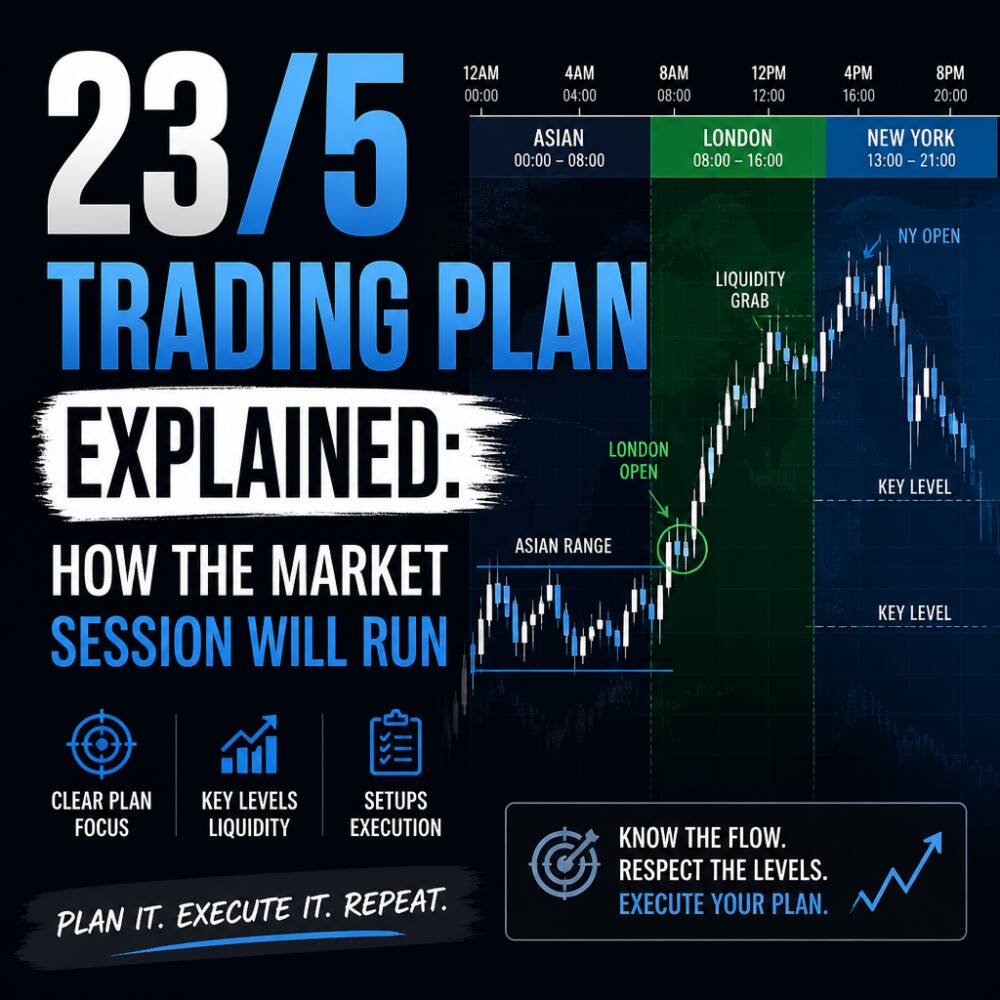
Starting Dec. 6, U.S. exchanges and securities information processors will move to a 23-hours-a-day, five-days-a-week operating schedule for equity market infrastructure, expanding the period when investors can trade with published quotes and real-time reporting. While U.S. trading already runs for 24 hours on many venues, the change primarily targets the overnight gap between 9:00 p.m. and 4:00 a.m. Eastern time—an interval that has historically lacked full market transparency and investor protections.
According to Nasdaq’s market-structure analysis, the shift is designed to make overnight trading more consistent, allowing an actionable national best bid and offer and quote publication for substantially more of the week. The main market implication is that investors—particularly those active during Asian daytime hours—may face a different trading experience, with more standardized reporting and a defined mechanism to curb extreme price moves.
Key takeaways
- Price move: The article does not cite a specific market-wide price change; instead, it describes a structural market change affecting how stocks trade overnight.
- Catalyst: Nasdaq said the move to 23/5 trading begins Dec. 6 and changes the availability of quotes, reporting, and protections during 9:00 p.m. to 4:00 a.m. ET.
- Key implication: Investors will see a more consistent market across longer hours, including an NBBO and tighter safeguards via a fixed LULD band overnight.
- Liquidity expectation: Most liquidity is still expected to remain centered on the regular U.S. session (9:30 a.m. to 4:00 p.m. ET).
What drove the move toward near-continuous trading
Nasdaq linked the 23/5 push to the broader growth in global retail and cross-asset trading. The report points to the expansion of investing through retail platforms and the experience of trading assets that already operate around the clock or near it, including crypto, foreign exchange and futures.
It also cites international demand for exposure to U.S. listed companies and sectors. As foreign investors allocate more capital to U.S. equities, they often trade while they are awake—which, in practice, has increased activity outside the traditional 9:30 a.m. to 4:00 p.m. ET window. Nasdaq said that overnight volumes have risen for years and recently surpassed 1% of average daily volume (ADV) in the 8:00 p.m. to 4:00 a.m. period.
How the U.S. equity market works today
According to Nasdaq, the current structure is defined by a set of protections during the U.S. Trading Session and a more limited framework in other hours.
- During the U.S. Trading Session (9:30 a.m. to 4:00 p.m.): Exchanges publish best bid and offer prices, and the consolidated tape calculates and shares the National Best Bid and Offer. Order Protection Rules are intended to stop trades at prices worse than the best displayed quotes. Nasdaq also said Rule 605 quantifies execution quality against the NBBO, while Limit Up Limit Down bands can pause trading when prices move too far or too fast.
- Outside the session (pre- and post-market): Nasdaq said NBB and NBO remain published, but LULD, Order Protection Rules and Rule 605 do not apply.
- Overnight (8:00 p.m. to 4:00 a.m.): Nasdaq said exchanges stop publishing quotes and the consolidated tape stops reporting. Even though trading can occur in that period, the public is not shown which stocks are active, the prices at which trades occur, or the bids and offers available for new orders.
For the upcoming change, Nasdaq described a “Global Trading Session” that covers trading from 4:00 p.m. to 9:30 a.m.
What will change starting Dec. 6
Nasdaq said the practical impact is concentrated on trading from 9:00 p.m. to 4:00 a.m. ET. Beginning Dec. 6, the report said five exchanges are expected to remain open in that window—Nasdaq, NYSE Arca, Cboe EDGX, MEMX and 24X—and the TRF will open to receive off-exchange execution reports in real time. Nasdaq also said the SIP will be open to publish quotes and trades from exchanges and the TRF as they occur.
The report further said a fixed LULD band will provide an investor protection mechanism intended to prevent orders from causing extreme price movements during the overnight period. In Nasdaq’s framing, investors should experience more consistency across the Global Trading Session because an NBBO and actionable quotes would be visible for 23 hours each day during the week.
Why it won’t be a full 24-hour market
Nasdaq said the market will still pause daily, drawing a comparison to futures market operations. The company attributed the remaining downtime to operational requirements that must occur at the “end” of each day, including the processing of corporate actions such as stock splits and dividends, ticker and security-detail updates tied to corporate events, and software and hardware maintenance across brokers, exchanges and the SIP.
On stock participation, Nasdaq said companies cannot opt out of the 23/5 schedule. However, it said it will be common to see halts outside the U.S. session tied to high-impact corporate actions (such as symbol or CUSIP changes, or major dividends or splits). In those cases, trading can be halted from 8:00 p.m. for trading until 8:00 a.m. on the action’s effective date to allow system adjustments and avoid trades based on outdated security details.
How overnight price protections are expected to work
Because overnight liquidity tends to be lower, Nasdaq said the risk profile changes: a large order or a limit-price mistake could lead to particularly poor executions. The report also highlighted that major economic or geopolitical developments can occur overnight, and that tight bands might suppress valid price discovery when new information breaks.
To address those competing concerns, Nasdaq said a flat ±20% LULD band was adopted. The band is anchored to two reference points: the 4:00 p.m. official closing price and the last round-lot trade before 7:30 p.m. The upper threshold is set at 20% above the higher of those reference prices, while the lower threshold is set at 20% below the lower reference price. Orders priced outside the band would be rejected.
Which investors and stocks may feel the effects most
Nasdaq said academic research suggests that overnight trading between 8:00 p.m. and 4:00 a.m. has produced limited price improvement for participants and has often involved “trades through” of quotes despite wider spreads, which can make trading more expensive. Under the new framework, Nasdaq expects improved quote visibility and protections could reduce costs for investors active during those hours.
On participation, Nasdaq said the primary beneficiary is likely to be Asian investors trading during their daytime hours. For stocks, the report said potential impact would most likely fall on names that already account for the largest share of overnight activity.
Nasdaq’s analysis indicated that, by trading value, participants tend to concentrate in familiar large names and certain ETFs, with the top 15 stocks accounting for over 60% of all trading in the period discussed. By share volume, Nasdaq said activity is more fragmented, with no single name reaching double-digit share share, and leaders often skewing toward smaller, lower-priced tickers and leveraged ETFs.
Bigger picture: what to watch next
With 23/5 trading set to begin Dec. 6, market participants will be watching whether overnight liquidity deepens, whether trading costs for global investors decline, and how often the fixed LULD band triggers in real time during news-driven periods. The next practical developments for investors will likely come from how brokers and trading platforms operationalize the expanded quote and reporting window, alongside upcoming corporate-action schedules and any regulatory guidance related to cross-border trading during Asian daytime hours.


