

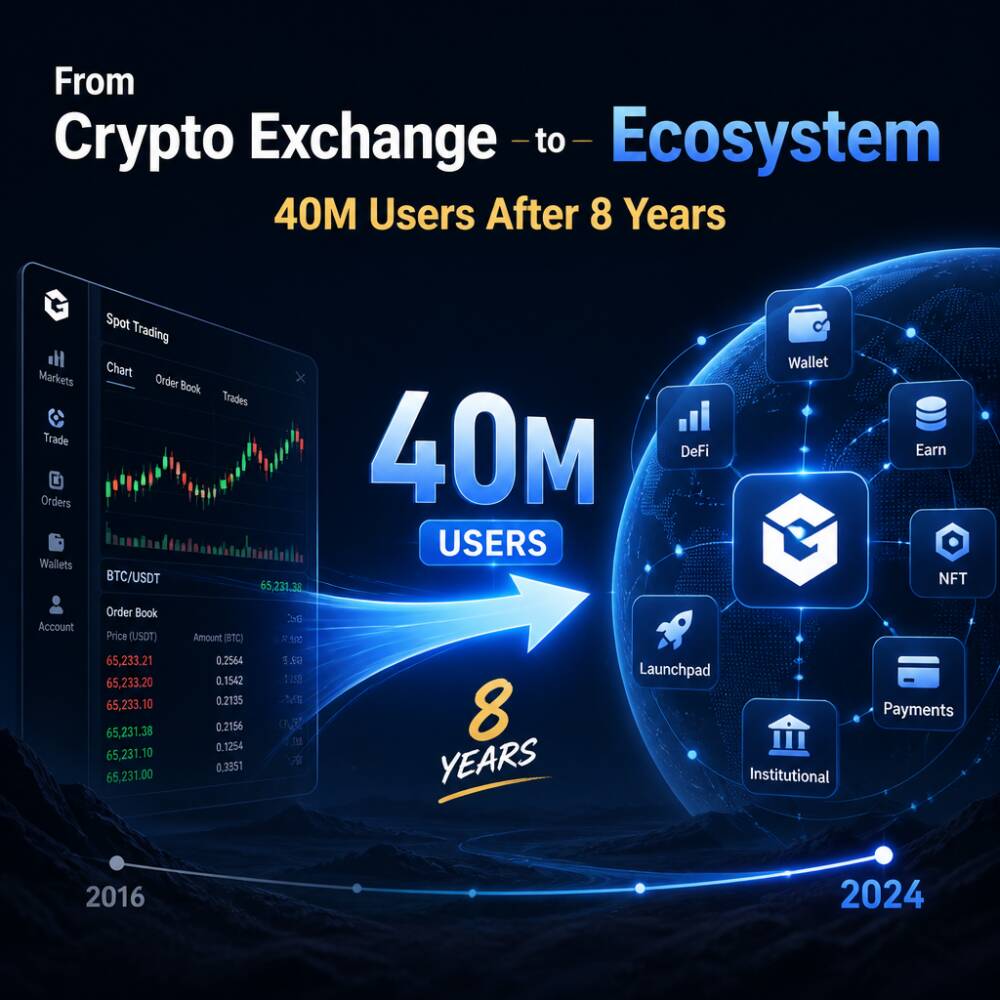
WhiteBIT and its parent group, W Group, marked major anniversaries this month, highlighting a shift from a single cryptocurrency exchange into a multi-company financial and technology ecosystem. The companies said WhiteBIT has processed $2.8 trillion in trading volume in 2026 and serves around 40 million users across W Group’s expanding network, which grew from eight to 11 companies within a year.
Beyond crypto trading, W Group described new business lines spanning licensed digital banking, AI-focused signed-data infrastructure, and partnerships intended to expand blockchain applications into areas such as sports and luxury automotive.
Key takeaways
- Scale: WhiteBIT reported $2.8 trillion in 2026 trading volume and more than 5,500 institutional clients.
- Catalyst: Expansion under W Group’s umbrella—plus regulatory approvals including MiCA-related authorization for WhiteBIT EU.
- Technology push: Whitechain’s transition to an Ethereum Layer 2 built on the OP Stack, with developers applying ahead of a planned public launch.
- Ecosystem implication: W Group is positioning trading, banking, payments, and blockchain infrastructure as interconnected services rather than standalone products.
What drove the expansion
W Group said it was formed in 2025 to consolidate businesses originally developed around WhiteBIT, with a strategy focused on linking traditional finance with digital assets and extending the technology into new industries. Rather than building independent companies in isolation, the group framed its approach as creating an ecosystem where financial infrastructure, technology, and consumer-facing offerings can reinforce each other.
In 2026, W Group expanded its roster of companies from eight to 11, while describing growth in its combined user base from 35 million to approximately 40 million. The group also cited investments and partnerships intended to support both regulated financial services and emerging technology use cases.
Among the additions, Dutch sports car manufacturer Spyker joined the group in June, which W Group said could create opportunities to apply digital finance and blockchain technology to luxury automotive. The group also disclosed a $400 million investment commitment in SignSplit, described as a signed-data platform for the AI era, with the seed round valuing SignSplit at $1 billion.
In banking, W Group pointed to hashbank, a Georgia-based fully licensed digital bank that it said combines traditional banking functions with cryptocurrency capabilities. The company’s stated aim is to allow customers to manage both fiat and digital assets through a single environment.
WhiteBIT at eight years: trading and liquidity
WhiteBIT remains the central platform within the W Group ecosystem, providing trading infrastructure and digital asset services for both retail and institutional participants.
For 2026, WhiteBIT reported $2.8 trillion in trading volume and said derivatives account for roughly $3.5 billion in daily activity. It also stated that the platform supports nearly 1,200 trading markets.
The company further described improvements in trading engagement and market liquidity. WhiteBIT said spot trading volume across its flagship BTC, ETH and WBT pairs increased more than fivefold, rising from $53 billion in 2020 to $276 billion in 2025. It also reported that bid-ask spreads across major markets narrowed approximately threefold since 2021, which it attributed to deeper liquidity.
Institutional coverage also expanded, with WhiteBIT saying it serves more than 5,500 institutional clients—including funds, brokers, and payment providers—through over 20 products and services designed to facilitate crypto liquidity and currency movement between fiat and digital assets.
Regulatory momentum and market access
W Group tied its international growth to regulatory progress. WhiteBIT said that in June 2026, WhiteBIT EU secured authorization under the EU’s Markets in Crypto-Assets Regulation (MiCA) from Austria’s Financial Market Authority, establishing what it described as a regulatory foundation to provide crypto-asset services across the European Union.
In May, the group said WhiteBIT launched a dedicated platform for users in the United Kingdom. It also noted that WhiteBIT joined Ghana’s regulatory sandbox in March, characterizing participation as support for the development of the country’s digital asset regulatory framework.
Taken together, the milestones position WhiteBIT and W Group to scale services in jurisdictions with explicit frameworks for crypto-related activity, a factor investors typically track for sustainability in the sector.
WBT and the shift toward broader blockchain use
WBT, WhiteBIT’s native coin, was cited as reflecting the growth of the platform and its ecosystem. The article said WBT reached an all-time high of nearly $88 in September 2026, compared with a launch price of $1.62 in 2022. It also stated that WBT is increasingly being used beyond trading.
White Group said that in November, Whitechain transitioned into an Ethereum Layer 2 network built on the OP Stack in partnership with Optimism. According to the group, WBT is used to pay transaction fees on the network.
Whitechain was also described as generating developer demand ahead of its public launch, with more than 140 teams applying to its Builders Program before the planned launch later in November. The move broadens the group’s footprint from exchange-led activity toward infrastructure that supports applications and financial services.
Bigger picture for investors
W Group said the next phase centers on connecting its businesses more tightly and translating combined capabilities into new products and services. The group’s long-term stated focus includes strengthening presence in regulated markets, expanding institutional financial services, and accelerating blockchain infrastructure development.
Looking ahead, investors will likely watch for additional regulatory milestones in key jurisdictions, progress and adoption of Whitechain’s public launch, and any further integration between WhiteBIT’s trading infrastructure and the group’s banking and AI-adjacent initiatives.


