

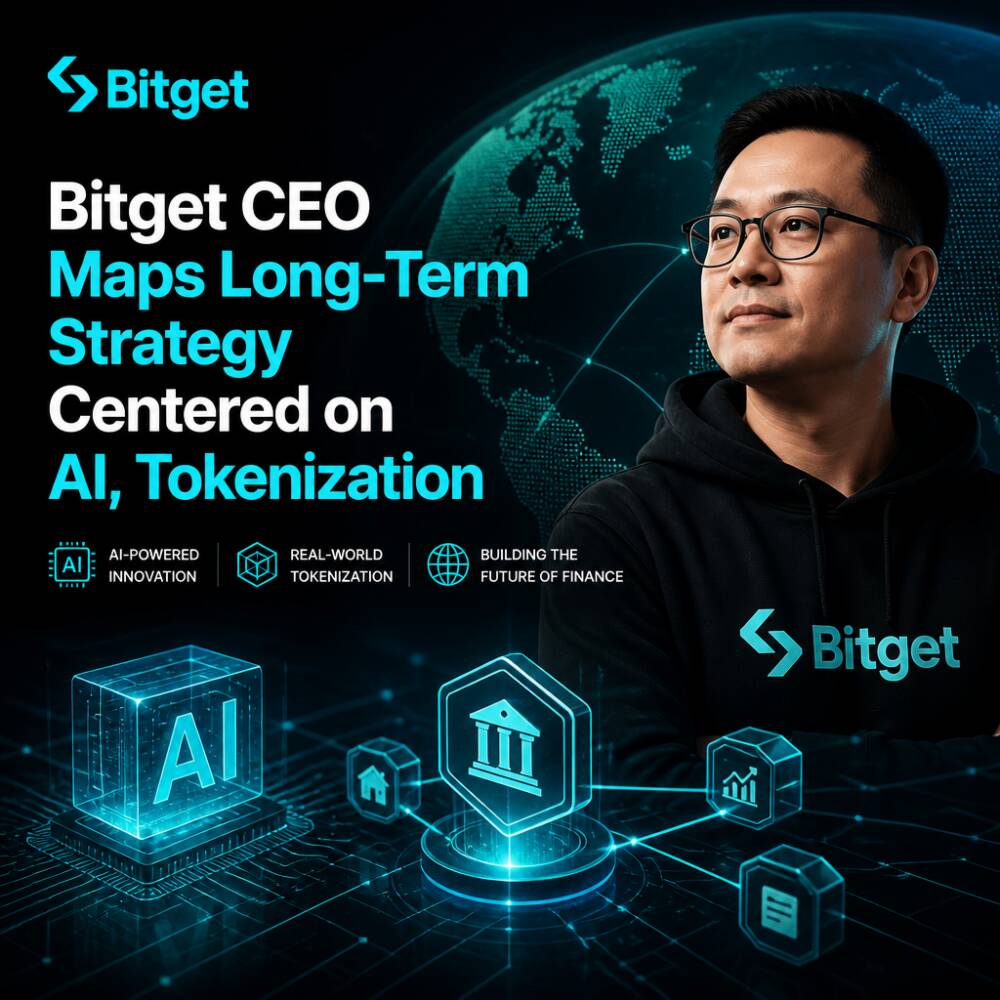
Bitget CEO Gracy Chen used the company’s mid-year address to lay out a long-term strategy aimed at building a “universal” financial platform that blends tokenization, artificial intelligence and broader market access. The plan comes amid signs that Bitget users are diversifying their activity beyond cryptocurrencies, with a growing share combining digital assets with traditional market exposure and using AI-enabled trading tools.
Key takeaways
- What happened: Bitget published its mid-year address outlining a shift from a crypto exchange toward a broader universal finance provider.
- Catalyst: The company cited changing user behavior, including mixed holdings across crypto and traditional assets and increased adoption of AI-powered tools.
- Key implication: Bitget is positioning tokenized products and AI-driven automation as mechanisms to reduce friction across financial markets.
What Bitget says is driving the strategy
According to Bitget’s address, user behavior in the first half of 2026 has moved toward cross-market activity and technology-assisted trading. The company reported that around 52% of its users hold both stocks and crypto, while 35% hold gold and other precious metals. Bitget also said that 51% of users use AI-powered tools, pointing to a shift in how retail participants seek market access and execution support.
Chen said the leadership’s focus has “pivoted from being a crypto exchange to a holistic universal provider,” adding that the platform’s goal is to remove barriers that historically separated different financial markets. In the company’s framing, users should be able to access crypto, stocks, contracts for difference, and gold while managing capital across those markets on a 24/7 basis.
The tokenization and product roadmap
Tokenization is presented as a core pillar of Bitget’s long-term vision for capital-market modernization. Chen tied the company’s stance to a “10% tokenization vision,” positioning blockchain infrastructure as a way to improve accessibility and capital efficiency.
In the address, Bitget referenced early product examples intended to demonstrate how tokenized investment structures could widen access. The company highlighted products including “Stock+” and “Reality” as examples of blockchain-enabled approaches designed to streamline participation in markets that are traditionally segmented by jurisdiction, rails, and operating constraints.
Beyond tokenized assets, Bitget also described plans to expand access through additional offerings, including tokenized investment products and pre-IPO investing. The overarching goal, as presented in the letter, is to avoid becoming an “asset supermarket” and instead address the operational friction separating different parts of the financial system.
AI as the execution layer
Artificial intelligence is the second major theme in the mid-year address, with Bitget positioning AI as moving beyond analysis toward execution. Chen described a workflow in which users specify investment goals and risk parameters, while intelligent systems handle ongoing market monitoring and trade execution.
The company also tied its AI direction to current product deployment. Bitget said it now serves more than one million AI trading users and more than one million copy trading users following the rollout of products including “GetClaw” and the “GetAgent Playbook.” The emphasis suggests the company is treating AI not only as a recommendation engine but as a way to automate parts of trading processes that often require continuous oversight.
Four principles behind the “universal exchange” concept
Bitget’s address, which it said is detailed in a published letter, outlines four principles meant to guide its universal-market strategy. The company described the priorities as:
- Improving capital efficiency by enabling more effective allocation across markets.
- Delivering global assets through a crypto-native experience, aiming to unify access channels.
- Expanding financial access through tokenized assets and pre-IPO investing.
- Simplifying trading through AI-powered automation, including execution support tied to user-defined goals and risk settings.
Collectively, these points frame Bitget’s approach as a technology-led attempt to connect fragmented market ecosystems—potentially reducing the operational costs and practical barriers that can limit retail participation in multiple asset classes.
What this could mean for investors and the market
Bitget’s address is less about announcing immediate financial results and more about signaling where it expects retail trading behavior to go: toward multi-asset access supported by automation and tokenized investment formats. The user statistics the company cited—particularly the share of users holding both stocks and crypto and the reported adoption of AI tools—suggest management believes demand is forming around platforms that can consolidate exposure and execution in one environment.
For investors, the key question is how these product directions translate into service quality and execution reliability as AI systems increasingly take on monitoring and trading tasks. With tokenization also positioned as a medium-to-long-term market shift, the pace of adoption will likely depend on regulatory clarity, product usability, and the ability to maintain liquidity and risk controls across tokenized structures and traditional instruments.
Going forward, investors and market participants will likely watch for further product updates tied to tokenized offerings and AI execution capabilities, along with any additional disclosures that clarify how Bitget plans to scale its “universal access” approach. The next meaningful signals may come from future product releases and user-growth updates, as well as broader market developments in tokenization frameworks and AI-enabled trading tools.


