

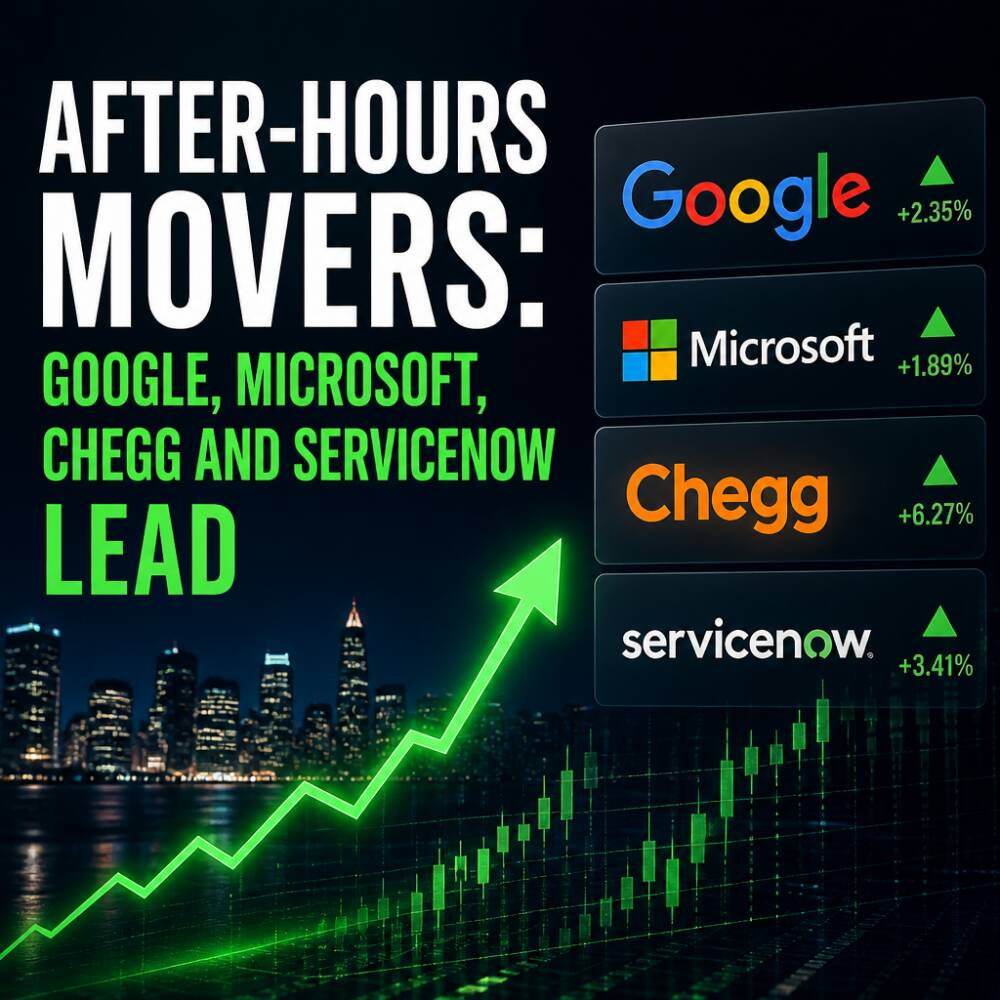
Extended-hours trading on Wednesday saw sharp, stock-specific moves across a range of sectors, led by corporate deal speculation, earnings surprises, and guidance updates. Data-driven results from software, consumer, and cybersecurity companies drove notable swings, while select retailers and industrial names fell after missing consensus metrics.
Key takeaways
- Chipotle shares rose more than 5% after third-quarter same-store sales beat expectations, reinforcing demand momentum.
- ServiceNow dropped about 15% as adjusted profit came in below expectations and fourth-quarter subscription revenue guidance landed at a narrower range.
- Fortinet fell about 25% after margin guidance and performance gaps emerged, despite top- and bottom-line results beating estimates.
- Microsoft gained about 2% on a fiscal first-quarter earnings beat, supported by faster growth in Azure.
- Carvana jumped about 10% after results topped expectations and the SEC closed a previously disclosed investigation without enforcement action.
Deals, guidance and earnings movers
Maplebear, the parent of Instacart, rose around 3% following a report citing sources familiar with the matter that DoorDash’s bid to buy the delivery platform could arrive as soon as Thursday morning. DoorDash fell about 1% in response, as investors appeared to weigh deal uncertainty and near-term implications for corporate strategy.
Chipotle Mexican Grill climbed more than 5% after reporting third-quarter same-store sales growth of 2.1%, exceeding analysts’ expectations for a 1.5% increase, according to FactSet. The update suggested resilience in demand and helped offset investor concerns that have often accompanied higher labor and food costs in the restaurant sector.
ServiceNow slid about 15% after third-quarter adjusted earnings of $1 per share missed the LSEG consensus estimate of $1.02. The company’s fourth-quarter subscription revenue guidance ranged from $4.245 billion to $4.255 billion, compared with a FactSet consensus of $4.25 billion, signaling a modest miss relative to expectations.
Fortinet dropped roughly 25% after reporting non-GAAP gross margin of 79.6% for the third quarter, versus an LSEG expectation of 80.1%. While Fortinet’s top- and bottom-line results beat Street estimates, the margin shortfall became the central issue for investors assessing the durability of profitability.
Microsoft rose about 2% after posting a beat on both top and bottom lines for its fiscal first quarter. Revenue came in at $92.28 billion compared with the $90.69 billion expected by LSEG. Adjusted earnings were $4.89 per share versus $4.73 expected. The company also reported that revenue in its Azure cloud business grew 48% year over year, a key driver in how investors gauge enterprise cloud momentum.
Alphabet fell about 9% in extended trading after third-quarter results showed negative free cash flow of $9.07 billion. The company’s core search revenue was $63.35 billion, below the $64.96 billion estimate from analysts tracked by LSEG. Total revenue also missed, at $127.58 billion versus $128.22 billion expected, underscoring pressure on cash generation and advertising-related performance.
Align Technology slipped about 1% after fourth-quarter revenue guidance missed analysts’ consensus estimates, according to FactSet data. The company also appointed Jennifer Davis—previously at Procter & Gamble—as chief executive officer, effective Dec. 31, a governance change that may shape investor expectations around product strategy and operational execution.
Sprouts Farmers Market plunged about 18% after third-quarter results fell short across key measures. FactSet data showed earnings per share, revenue, and same-store sales all trailed the Street’s consensus, reflecting broader challenges facing parts of the grocery retail segment.
Ford Motor fell nearly 2% after hours. While adjusted earnings of 49 cents per share beat the LSEG consensus estimate of 40 cents, revenue of $46.08 billion narrowly missed the $46.24 billion expected.
FedEx declined almost 2% despite reporting third-quarter adjusted earnings that beat expectations. The company also increased its outlook for full-year revenue growth to 12% year over year, up from an earlier call for roughly an 11% increase, supported by stronger pricing and improved shipment volumes—suggesting the market still focused on other lines beyond the headline forecast.
Honeywell Aerospace lost more than 2% even after raising its full-year outlook for pro forma standalone adjusted earnings per share to a range of $7.85 to $8. The company also announced an initial quarterly cash dividend of 40 cents per share, meaning the selloff likely reflected investor expectations around how quickly earnings improvements translate into near-term performance.
Carvana surged about 10% after third-quarter revenue and adjusted EBITDA beat Wall Street expectations. The used-car retailer also said the Securities and Exchange Commission closed a previously disclosed investigation and would not take enforcement action, reducing regulatory overhang that can weigh on valuation multiples.
Interpretation: what investors focused on
Across the complex mix of results, investors appeared to prioritize guidance alignment, margin profile, and free-cash-flow quality. Stocks like ServiceNow and Fortinet sold off sharply on misses tied to profitability and subscription-related expectations, while Microsoft and Chipotle gained on beats that signaled continued operating momentum. Alphabet’s decline reflected heightened sensitivity to cash generation and advertising demand indicators, not just earnings.
Deal-related headlines also mattered. The Instacart-linked report helped Maplebear extend gains, while DoorDash fell as investors digested the timeline and strategic implications of a potential transaction.
What to watch next
Investors will likely turn to the next wave of company updates for confirmation of these themes—particularly subscription growth and margins for enterprise software, cash-flow strength for large ad-supported platforms, and demand trends for consumer-facing retailers. With the broader earnings season continuing and macro drivers such as rate expectations remaining central to equity valuation, upcoming guidance updates and any follow-through on reported deal timelines could further shape extended-hours sentiment.


