

XRP rose more than 3% over the past 24 hours as the broader crypto market consolidated after its late-August rally. The rebound comes as investors weigh a shift in interest-rate expectations that could tighten financial conditions—an issue that still hangs over risk assets.
Even with rate fears in the background, demand signals within crypto remain relatively constructive, and XRP-specific activity on its ledger is flashing an environment that could support a larger move—provided the token clears key technical resistance levels.
Key takeaways
- Price move: XRP gained more than 3% in the last 24 hours.
- Catalyst: A mix of improving crypto risk sentiment, XRP ETF net inflows at the start of September, and technical consolidation after the late-August advance.
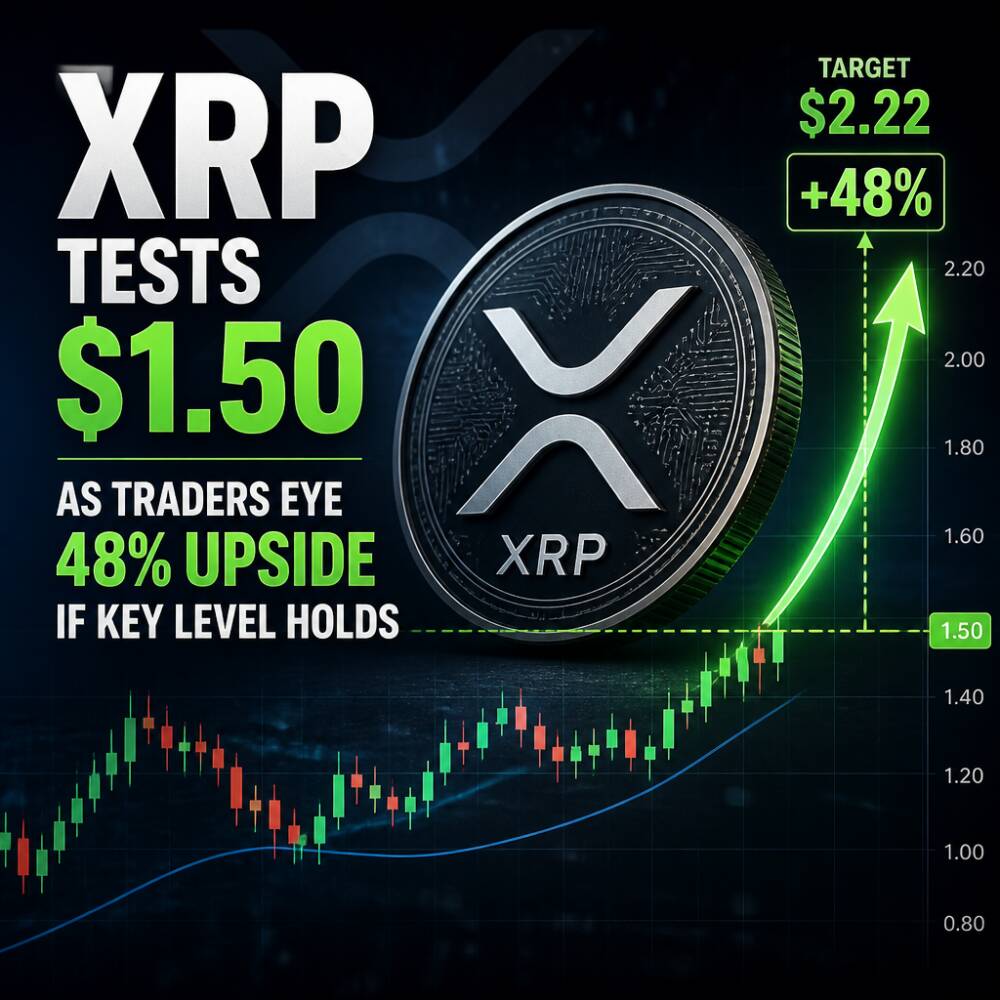
- Key implication: Bulls need a confirmed break above the $1.50 resistance area to sustain the prior uptrend; failure could extend consolidation.
- Macro watch: Market expectations for a September rate increase have risen, keeping upside dependent on whether Fed messaging is less hawkish than priced.
What drove the move
Crypto markets have been attempting to stabilize following a late-August rally, and XRP has participated in the recovery as traders move through consolidation phases. However, the broader macro backdrop remains a constraint. According to market-implied pricing referenced in the report, expectations for a September interest-rate increase have climbed to around 60%, a level that can translate into higher discount rates and tighter liquidity—conditions that typically weigh on cryptocurrencies.
Despite that concern, sentiment indicators remain firm. The Crypto Fear and Greed Index, cited at a reading of 73, places the market in “Greed” territory, suggesting investors are more willing to take risk than during more defensive phases. That reading is consistent with a market that still has buyers willing to step in, even after the earlier pullback.
On the XRP-specific side, the report pointed to changes in onchain activity. Active addresses on the XRP Ledger rose sharply in late August before gradually declining as network activity normalized. While the pullback indicates the late-August surge may have been temporary, the report said the seven-day moving average of active addresses crossed above the 30-day average—an event previously associated with meaningful price moves. The key nuance is that such a crossover is not inherently directional; it primarily signals that activity dynamics are changing quickly enough to potentially coincide with increased volatility.
Market reaction and ETF demand
One of the clearest near-term demand indicators highlighted in the report involves XRP exchange-traded products. According to data cited from SoSoValue, XRP-linked ETFs recorded approximately $13 million in net inflows at the beginning of September, translating to an average of roughly $3.3 million per trading day.
If that run rate were maintained, the report projected monthly inflows could reach between $60 million and $70 million. It also noted that would represent a decline of more than 50% versus the previous month, implying that institutional demand may be cooling after a stronger August. Still, the report cautioned against extrapolating too early in the month because daily ETF flows can fluctuate significantly, particularly around major macro events.
For investors, the timing matters: the Federal Reserve’s September 16 interest-rate decision and commentary from Fed Chair Kevin Warsh were identified as potential drivers for demand later in the month. In practical terms, a less hawkish message could strengthen risk appetite and support crypto inflows, while signals that policy will stay restrictive—or tighten further—could dampen buy-side interest across the asset class.
Technical setup: what must happen next
Alongside the demand and macro factors, the report emphasized a technical pattern forming on XRP’s daily chart: a bullish flag. In this framework, the flag is typically interpreted as consolidation after a sharp run, with the “flagpole” representing the preceding advance and the downward-sloping consolidation channel reflecting cooling momentum.
However, the setup remains unconfirmed while XRP trades below the flag’s upper boundary. The report identified $1.50 as the most important resistance area for bulls. It said a decisive breakout and sustained close above $1.50 would support continuation of the late-August rally. It also pointed to a first major upside objective around $1.80, aligned with a prior bullish projection.
If XRP fails to clear $1.50, the token could remain trapped within the flag structure, extending consolidation and raising the risk that repeated rejections weaken the pattern. The report also highlighted the importance of trading volume when evaluating any breakout: a move above $1.50 accompanied by rising volume would typically carry more conviction than a brief intraday spike.
Looking further out, the report projected a full technical target near $2.10 based on the flagpole length, describing it as a potential objective rather than a guaranteed outcome. It noted that XRP would need to clear $1.50 first, and then also address resistance around $1.80, before that larger target becomes relevant.
Bigger picture: rates and volatility risk
With the market still anchored to rate expectations, XRP’s near-term direction is likely to be determined by whether crypto momentum can offset the pressure from rising expectations of higher-for-longer policy. The report’s combination of “Greed” sentiment, start-of-month ETF inflows, and shifting onchain activity suggests the path of least resistance could still be upward—but confirmation depends on both macro catalysts and a clean technical break.
Investors will be watching whether the Fed’s upcoming communications and policy decision align with (or diverge from) current pricing, alongside continued ETF flow data that could reveal whether institutional demand is stabilizing or slowing further. A sustained move through $1.50 would be the immediate technical signal to monitor, while failure to break could keep traders focused on range-bound behavior.


