

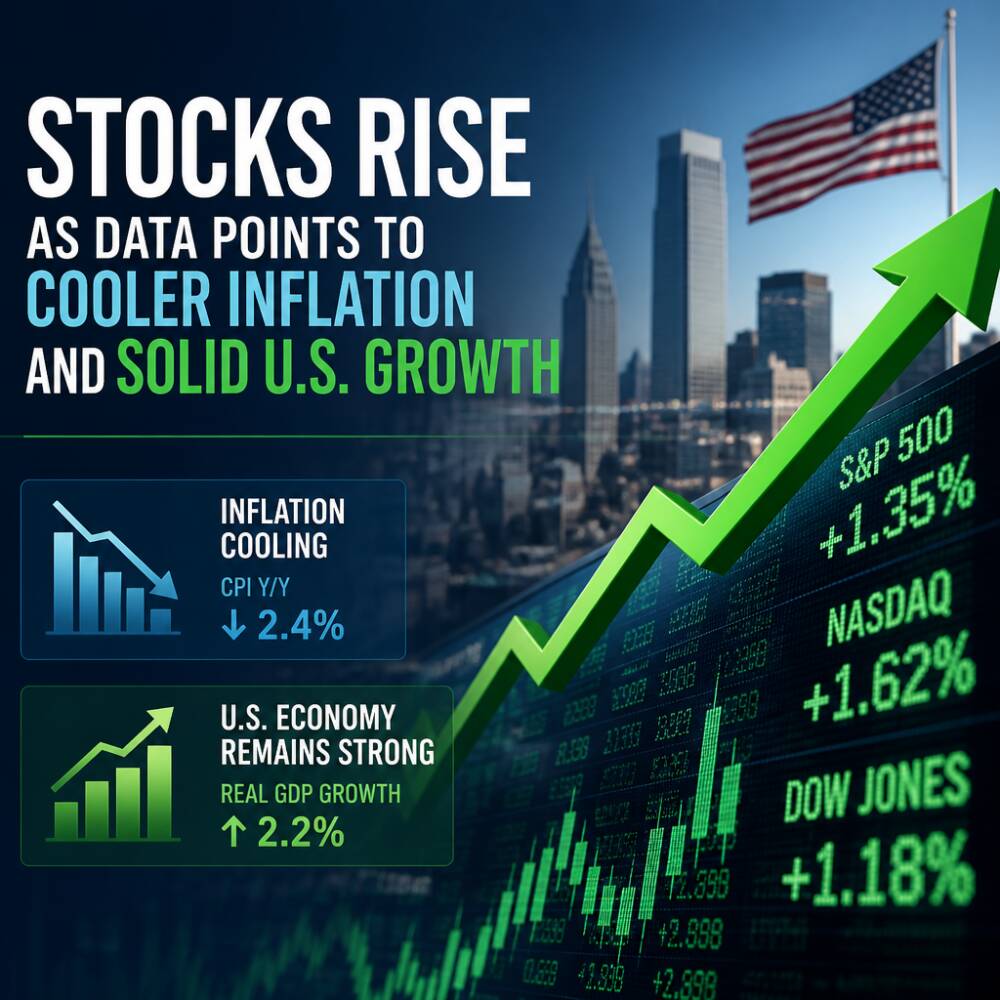
U.S. stock index futures and major benchmarks climbed on Wednesday as investors pared back concerns about near-term inflation. The S&P 500 rose, alongside gains in the Nasdaq 100, after revisions to the latest core PCE inflation data pointed to a slower pace of price increases.
Attention then shifted to upcoming company and economic catalysts, including Micron Technology’s earnings after the close, alongside a fresh set of U.S. data releases that included ADP employment, personal spending, and weekly mortgage activity.
Key takeaways
- Price move: The S&P 500 rose by about 0.34% while the Nasdaq 100 gained roughly 0.52%.
- Catalyst: Inflation updates tied to core PCE eased rate-hike expectations, while revised GDP growth and stronger activity in parts of the U.S. economy supported risk appetite.
- Market implication: With the Fed path increasingly linked to the next inflation print, investors are likely to stay sensitive to data and guidance, particularly from rate-sensitive and AI-exposed sectors.
- Rates and oil: Treasury yields eased as inflation concerns cooled, but crude oil firmed after Russia extended a diesel export ban—an offsetting factor for inflation outlooks.
What drove the market higher
Equities climbed after inflation concerns eased following revisions to the Q2 core PCE price index and a smaller-than-expected rise in August’s core PCE measure, according to the report. Those changes helped lower the perceived odds of a Fed rate hike next month to 35% from 52% earlier in the week, reflecting improved confidence that price pressures are moderating.
Investors also drew support from the broader growth picture. Data showed that U.S. Q2 GDP was revised higher, and additional releases pointed to resilience in consumption and hiring activity. The report cited a stronger-than-expected result for September ADP employment change and an increase in August personal spending that met expectations.
Economic data and inflation signals in focus
The day’s U.S. economic releases reinforced a mixed but constructive backdrop. According to the report, August personal spending rose 0.9% month over month, matching expectations and marking the largest increase in five months. Personal income, however, rose only 0.2% month over month, weaker than expectations.
On inflation, the report said the August core PCE price index rose 0.2% month over month and 3.0% year over year, both below the consensus forecast. Additionally, the Q2 core PCE price index was revised down to 3.3% from 3.6% previously reported.
Labor-market momentum also played a role in rate expectations. The report said the September ADP employment change increased by 90,000, beating expectations of 75,000. Separately, weekly mortgage data pointed to cooling demand: MBA mortgage applications fell 6.0% for the week ended September 25, with both purchases and refinancing declining. The average 30-year fixed mortgage rate rose to a multi-month high, the report noted, moving higher by 18 basis points to 7.30%.
Stocks to watch and sector leadership
Investors looked ahead to Micron Technology’s earnings after the close, the report said, with expectations focused on demand signals tied to AI spending.
In the meantime, technology and software stocks provided support. According to the report, software-related names rose, including Datadog and Salesforce among the leaders. Cybersecurity stocks also strengthened, with multiple large-cap and mid-cap names up more than 1% to 2% in the session.
Notable single-stock moves included Hewlett Packard Enterprise, which gained after raising its fiscal 2027 networking segment revenue growth outlook. Huntington Ingalls Industries climbed after the report cited a U.S. Navy award tied to the USS Harry S. Truman refueling and overhaul. Target rose after HSBC upgraded the stock to buy from hold.
On the downside, the report said Moderna fell following a Citi downgrade to sell from neutral. Cal-Maine Foods dropped after quarterly net sales came in below consensus, while Northrup Grumman declined after losing out to Boeing on a Navy fighter jet contract.
Energy, global markets, and the bond reaction
Oil prices moved higher, which helped set a counterpoint to the softer inflation narrative. Nov WTI crude rose more than 1% after Russia extended a ban on most diesel exports through October, according to the report. The extension is linked to damage to Russian refineries following Ukrainian drone and missile attacks, and it is expected to tighten global supply dynamics.
In rates, Treasury performance reflected the day’s cooling inflation signal. The report said December 10-year T-notes were up modestly, with the 10-year yield down about 2.1 basis points to 5.234%. It also attributed some of the bid to possible end-of-month and end-of-quarter buying by bond funds. However, gains in Treasuries were described as limited by two opposing factors: stronger-than-expected ADP employment data, and the rise in crude oil, both of which can weigh on the inflation outlook.
Outside the U.S., the report indicated European and Asian markets were mixed. The Euro Stoxx 50 fell modestly, while Japan’s Nikkei-225 rose sharply and China’s Shanghai Composite finished higher. European bond markets also moved lower in yields, with the report citing declines in German bund and UK gilt yields.
Bigger picture: rates likely remain data-driven
With the Fed meeting approaching, investors appear to be recalibrating the rate-hike path based on revisions and new readings for core PCE inflation. The report’s discussion of implied probabilities for the next Fed decision suggests markets will continue to trade the next inflation and labor-market signals closely, especially as oil’s move could complicate disinflation expectations.
Looking ahead, the next set of catalysts includes Micron’s earnings after the close, additional economic data, and the ongoing calibration of expectations for central bank policy. Investors will likely focus on guidance and demand commentary in the AI supply chain, alongside the durability of cooling price pressures in upcoming inflation releases.


