

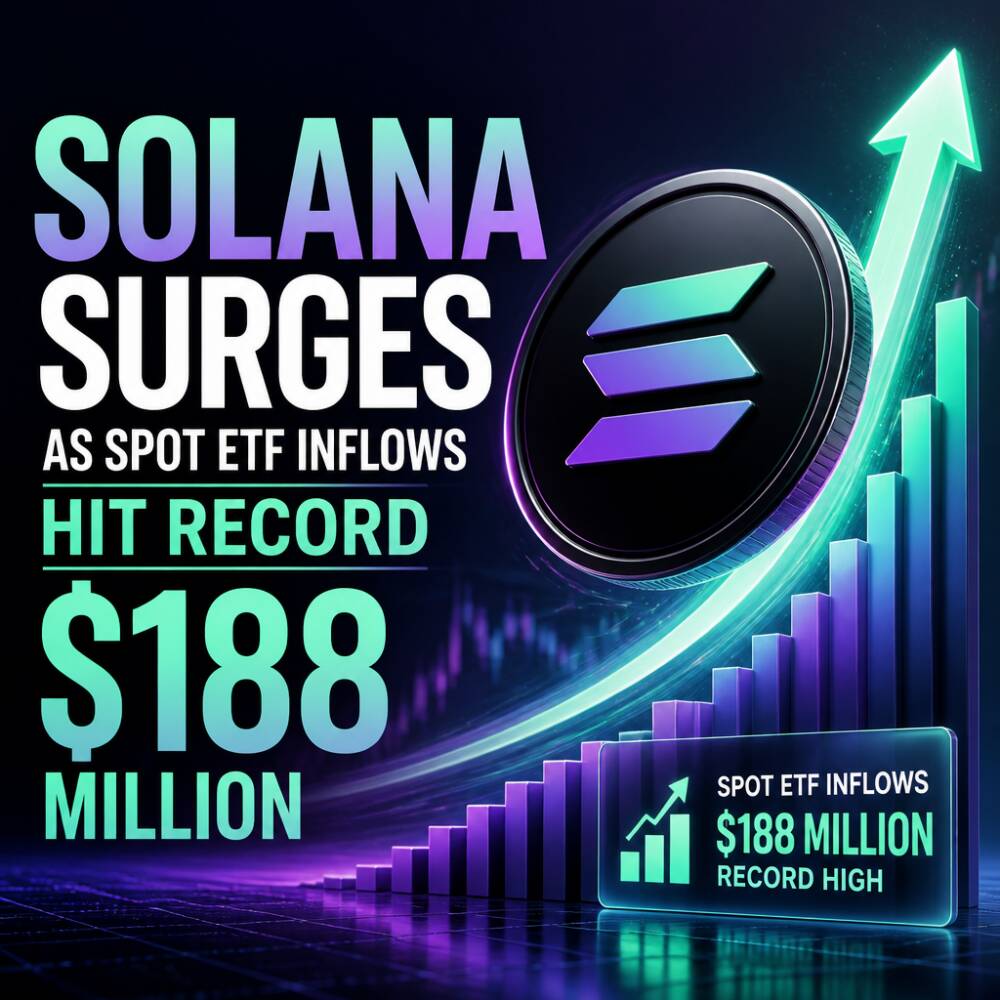
Solana’s token, SOL, is holding above 120 after US spot Solana exchange-traded funds logged their largest weekly inflows since launch, reinforcing demand as price tests resistance around 125. Data from CoinGecko on Sept. 30 showed SOL steady around 120, up more than 4% over the prior seven days.
The latest support comes as investors monitor progress on Solana’s Alpenglow network upgrade and a rise in stablecoin liquidity on the blockchain. Market participants will be watching whether SOL can break decisively above the late-September ceiling near 124.95–125, or whether it stalls within the current trading range.
Key takeaways
- Price move: SOL was trading near 120 on Sept. 30, up more than 4% on the week after holding above 120.
- Catalyst: US spot Solana ETFs recorded $188 million in combined net inflows over the five trading sessions through Sept. 25, according to SoSoValue.
- Network progress: The Alpenglow upgrade is running on both Solana’s public devnet and testnet, with targeted performance improvements still awaiting mainnet confirmation.
- Liquidity backdrop: Stablecoin supply on Solana reached a record $17.3 billion on Sept. 25, supporting ecosystem activity.
- Implication: A clean break above 124.95–125 would strengthen the near-term uptrend; failure to do so keeps SOL vulnerable to range-bound trading.
What drove the move
ETF flows have been a central tailwind. According to SoSoValue data cited in the report, US spot Solana ETFs accumulated $188 million in net inflows across five trading sessions through Sept. 25. Those inflows represent the biggest weekly figure since the ETFs launched, giving the asset incremental institutional support during a period when SOL was already recovering from a recent low.
In parallel, Solana’s infrastructure roadmap continues to advance. The Alpenglow upgrade—designed to replace TowerBFT with the Votor consensus system—has reached testing phases on both public devnet and testnet. The upgrade targets transaction finality of roughly 150 milliseconds, down from about 12.8 seconds under the existing system.
However, the report notes that a mainnet launch date has not been confirmed and the 150-millisecond target has not yet been demonstrated under live conditions. That keeps expectations tethered to devnet and testnet results rather than confirmed mainnet performance.
Market reaction and liquidity signals
Alongside ETF demand and upgrade progress, liquidity within the Solana ecosystem has improved. The report said stablecoin supply on Solana hit a record $17.3 billion on Sept. 25, about $600 million higher than the previous August peak. DefiLlama data cited in the report placed Solana as the third largest blockchain for stablecoin supply, behind Ethereum and Tron.
USDC accounted for approximately $8.4 billion of the total stablecoin supply. Wallet data cited from Solana Compass also indicated that the number of Solana wallets holding USDC rose from roughly 8.1 million on Aug. 10 to more than 9.3 million by Sept. 25.
Taken together, the combination of rising ETF inflows, forward progress on Alpenglow testing, and record stablecoin balances suggests investors are positioning for a sustained improvement in activity—though SOL’s ability to translate that backdrop into a breakout remains the immediate question.
Can SOL clear the 125 resistance?
Technical levels highlighted in the report place 125 as the key near-term threshold. SOL previously reached 124.5 on Sept. 27 before slipping back below 120, where it has since regained stability.
On the daily view, the report said the Elder Force Index remains positive, indicating buying pressure is still present, but momentum has cooled versus the strongest part of the rally. The nine-day Rate of Change (ROC) remains positive at 1.75%, which would support the broader uptrend structure as long as momentum does not flip negative.
For a more decisive signal, the report pointed to the 4-hour chart and a breakout level of 124.95, described as the upper boundary of the 20-period Donchian Channel. SOL was reported around 121.11, with the channel midpoint near 120.64 and the lower boundary around 116.32.
The analysis suggested that a 4-hour close above 124.95 near 125 would move SOL above both the Donchian upper band and the late-September high. It also identified 130 as the next psychological level if a breakout holds.
Conversely, the report flagged 116.32 as a critical downside line for range support. A 4-hour close below that level would break the lower edge of the current channel and weaken the structure formed since the Sept. 29 low. The report also cited 117–118 as a nearer support zone, noting that a sustained move below 120 with negative momentum could indicate the rally is losing control.
Money Flow Index (MFI) was reported at 55.38 on the 4-hour chart after recovering from the mid-30s during the pullback. The report said that holding above 50 would reinforce positive inflows, while failing to clear the resistance could keep SOL contained within its existing range.
Bigger picture: upgrade optimism meets confirmation risk
The near-term setup for SOL is being driven by a combination of institutional inflows and improving on-chain liquidity, but the core performance narrative still hinges on network upgrades moving from testing to mainnet. With Alpenglow targeting materially faster transaction finality, investors will likely weigh any future confirmation milestones against the current lack of a confirmed mainnet date and the absence of live-market validation for the 150-millisecond target.
With SOL hovering just below its resistance zone, the next few trading sessions should reveal whether ETF-driven demand can overcome supply near 125—or whether the token remains locked in a range despite the supportive macro of rising stablecoin balances and upgrade progress.
What to watch next: Continued ETF flow data, any updates on Alpenglow’s path toward mainnet, and whether SOL can secure a 4-hour close above 124.95–125. For broader market context, incoming US macro releases and rate expectations can also influence risk appetite and momentum in high-beta crypto-linked assets.


