

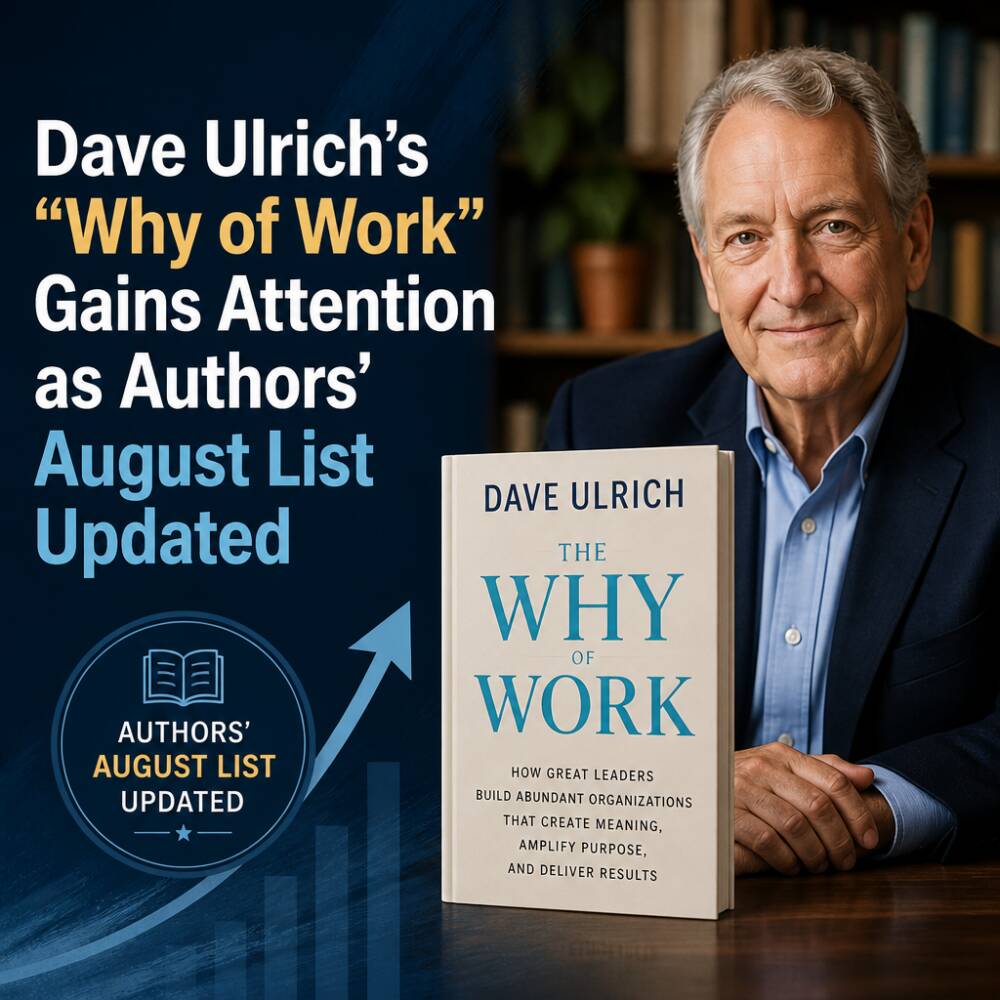
Motley Fool podcast host David Gardner sat down with Dave Ulrich, a professor emeritus at the University of Michigan’s Ross School of Business and author of The Why of Work, to discuss how leaders can build workplaces that deliver more than pay—namely meaning, psychological safety, and a culture that customers can feel. The episode linked those themes directly to how investors may evaluate companies, arguing that intangible factors tied to human capability can materially influence long-term economic performance.
Ulrich, who has advised executives across more than 80 countries, emphasized that the “why” of work—how jobs create value for customers and communities—often matters more than the physical location of work. With AI reshaping how organizations operate, he also argued that technology should be treated as a means to enable human judgment and creativity, not as a substitute for critical thinking.
Key takeaways
- No specific market move: the discussion was centered on workplace strategy and investing-relevant intangibles rather than any actionable trade or corporate news.
- Catalyst: Ulrich’s core framework from The Why of Work—and its implications for culture, talent, and AI—drove the conversation.
- Implication for investors: the episode argued that culture and human capability can represent a large share of company value and may not be captured by traditional financial metrics.
- Implication for CEOs: psychological safety, purpose alignment, learning and growth, and belonging were presented as practical culture dimensions that can affect performance.
- AI stance: AI should enhance efficiency and capacity while human ingenuity—vision, innovation, empathy, and wisdom—remains the differentiator.
What drove the discussion: culture and the “why of work”
Ulrich’s starting point was that organizations shape daily life, from the products people use to the services people rely on, and therefore the quality of work environments has broader economic relevance. He described an “abundant organization” as one where work can get done effectively and where people experience positive conditions rather than friction or dysfunction.
The podcast also connected that organizational approach to investing. Ulrich argued that investors increasingly focus on intangible value—such as internal capability, culture, and strategy execution—because these elements can influence how companies perform over time. He described research-based thinking that portions of market value often relate to intangibles, noting that investors may interpret such factors as economically meaningful even when they do not appear cleanly on financial statements.
Market lens: why investors may look beyond accounting metrics
Ulrich and Gardner framed a key investing argument: two companies in the same industry can earn similar earnings but trade differently based on the perceived quality of their organization. Ulrich suggested that investors quickly sense differences in culture and execution at the customer level, which then feeds into valuation through long-run expectations.
Ulrich also described a practical way leaders can align hiring and performance with what customers value. In his view, one of the most telling tests is whether customers would choose the leadership and employees the firm is installing—implying that confidence from customers can be an economic asset. He emphasized that even when candidates are technically qualified, customer trust and belief can be the deciding factor.
Within that framework, culture was defined less as a set of slogans and more as behaviors that customers experience and rewards that lead to buying more. Ulrich argued that values should be translated into observable actions and tied to how customers respond, otherwise companies risk building internal statements that do not match external branding.
Building a stronger workplace: safety, purpose, growth and belonging
A central section of the conversation mapped workplace effectiveness to a simplified set of culture elements. Ulrich described a four-part structure for what employees need to thrive: physical and psychological safety, belief or purpose alignment, becoming through learning and resilience, and belonging through community.
He linked psychological safety to modern workplace realities, including the lasting impact of COVID-era expectations. He also stressed that employees require not only reassurance but a workable environment where mistakes can be addressed and learning can happen—an approach he characterized as essential to sustaining engagement and performance when uncertainty increases.
Ulrich’s comments extended to a “talent” equation he said reflects today’s organizational requirements. He argued that AI can provide efficiency and capacity, while “human ingenuity” supplies the vision, innovation, empathy, and wisdom needed to translate inputs into better decisions and better outcomes for customers and teams.
AI’s role at work: enablement, critical thinking, and risk controls
Gardner asked how Ulrich’s view of the “why of work” changes if AI eventually performs much of what humans currently consider work. Ulrich responded that AI is a means, not an end, and should support organizational tasks—such as talent development, marketing, and execution—without replacing the critical thinking that sits behind good judgments.
He cautioned that AI can generate polished outputs while still missing the substance of human reasoning. Ulrich also warned about cognitive risks, describing concerns around what he characterized as cognitive surrender—where individuals may rely on AI-generated work without building their own thinking capabilities.
The episode also elevated questioning as a human differentiator. Ulrich and Gardner both tied human ingenuity to the ability to ask better questions in an AI-rich environment, arguing that curiosity and judgment become more important as answers become easier to generate.
Bigger picture: what companies and employees should watch next
Ulrich’s framework implies that companies will face a dual challenge: upgrading internal culture systems while also integrating AI thoughtfully. He suggested the workplace agenda for the near term should focus on translating values into behaviors customers recognize, hiring for both competence and customer confidence, and maintaining learning and belonging as performance pressures rise. For employees, the emphasis was on finding work that creates value and aligning personal contribution with purpose, regardless of whether work is remote or office-based.
With AI adoption accelerating and organizational structures continuing to evolve post-pandemic, investors and executives may look for evidence that companies are building the human capability underneath productivity tools—especially around psychological safety, resilience, and the judgment required to separate what “looks right” from what is actually correct.


